What single ply and built up roofing are
Before comparing their longevity, a Brazil owner benefits from understanding what these two systems are, since they take fundamentally different approaches to covering a flat roof. The difference in construction shapes how each performs and lasts.
Single ply roofing
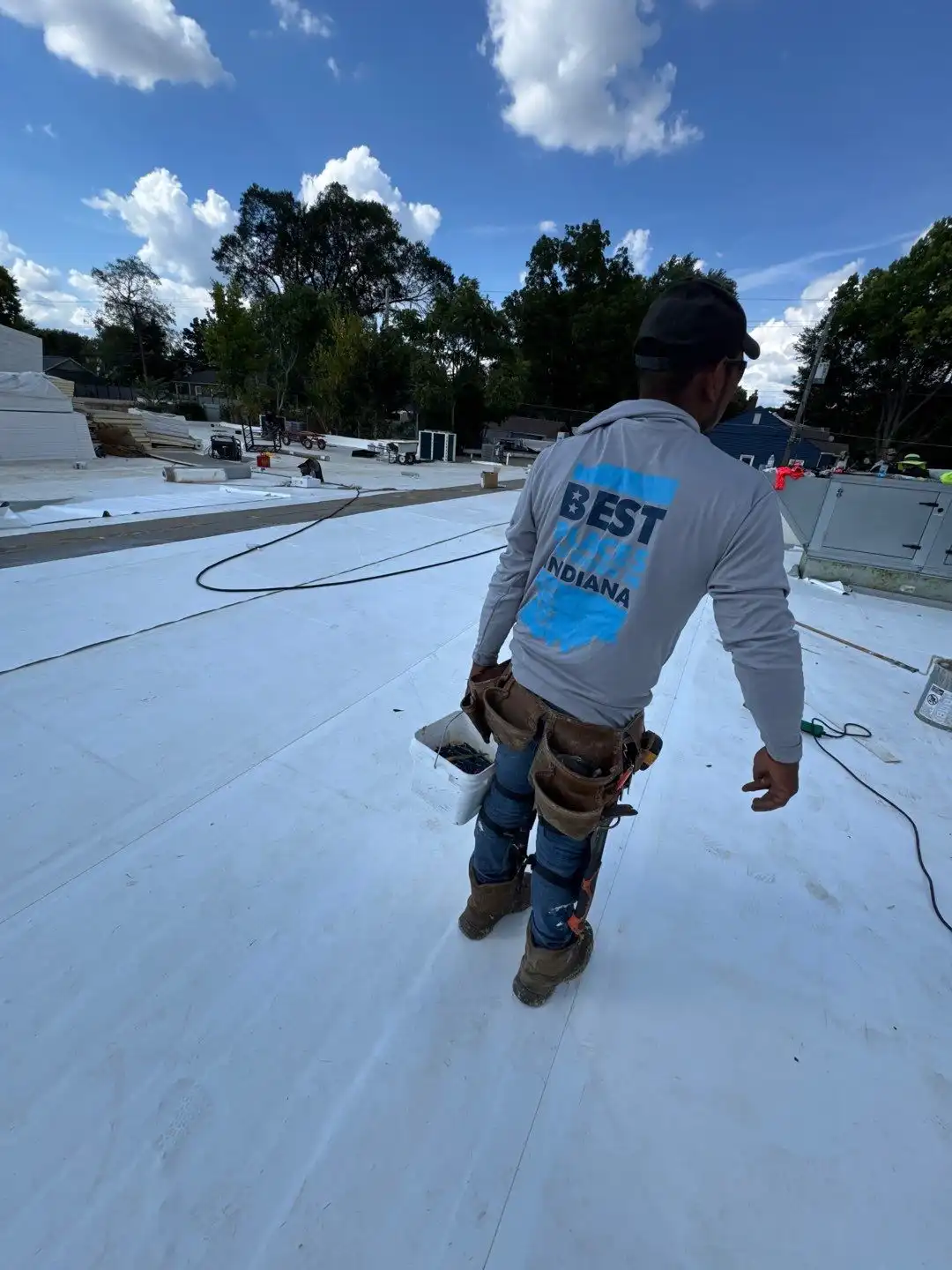
Single ply roofing covers the roof with a single layer of membrane, one sheet of material like TPO, EPDM, or PVC, installed over insulation and attached and sealed at the seams. It is a modern approach valued for its efficiency, lighter weight, and the specific properties of each membrane. For a roof, single ply means relying on one engineered layer to provide the waterproofing, with that membrane's characteristics determining much of the roof's performance and longevity.
Built up roofing
Built up roofing, often called BUR, is the traditional approach of constructing the roof from multiple layers, alternating plies of asphalt or bitumen and reinforcing fabric, built up into a thick, redundant membrane, topped with a surfacing like gravel. It is the older, time tested method. For a Clay County roof, built up means a multi layer system whose waterproofing comes from the combined plies, providing redundancy since no single layer alone is the only barrier, which is its defining characteristic.
The fundamental difference
The fundamental difference is single versus multiple layers: single ply relies on one engineered membrane, while built up relies on multiple redundant plies. This shapes everything about how they perform, single ply offering efficiency and engineered properties, built up offering redundancy and proven toughness. For a Brazil roof, this difference in construction is the starting point for understanding their longevity, since the single layer and multi layer approaches age and fail differently, which bears directly on which lasts longer.
Two approaches to a flat roof
Single ply and built up represent two approaches, the modern single engineered membrane and the traditional multi layer redundant system, each with its own logic and strengths. For a owner, understanding these approaches is the foundation for comparing their longevity, since how long each lasts flows from how it is built. The rest of this guide compares them on lifespan and fit, building on this understanding of what each system is.
Understand your flat roof options
The broader point about comparing single ply and built up roofing is that the question of which lasts longer has a more useful answer when framed around a specific building rather than in the abstract. A Brazil owner who asks which system will serve their roof longest, given its traffic, exposure, and structure, gets a real answer, while one who seeks a blanket winner gets a misleading one. Both systems can serve long, so the productive comparison is about fit, which is what leads to the genuinely longer serving choice for a particular roof.
Finally, both systems reward the same ongoing care, since maintenance and good drainage extend a roof of either type and neglect shortens both. A owner who maintains the roof, keeps the drainage clear, and addresses problems early gets the full longevity the chosen system can offer, whether single ply or built up. That consistent care, more than the initial system decision, is what determines whether a roof reaches or exceeds its expected life, which is the throughline across both approaches to a commercial flat roof.
It also helps to recognize that the installation often matters more than the system for longevity, because a well installed roof of either type outlasts a poorly installed one of the other. A Clay County owner who prioritizes a skilled, reputable contractor secures a roof that reaches its full life regardless of which approach it uses, while one who chooses purely on system type or price may be disappointed. The quality of the work is a larger lever on longevity than the single ply versus built up choice itself, which is worth keeping in view.
The broader point about comparing single ply and built up roofing is that the question of which lasts longer has a more useful answer when framed around a specific building rather than in the abstract. A Brazil owner who asks which system will serve their roof longest, given its traffic, exposure, and structure, gets a real answer, while one who seeks a blanket winner gets a misleading one. Both systems can serve long, so the productive comparison is about fit, which is what leads to the genuinely longer serving choice for a particular roof.
Finally, both systems reward the same ongoing care, since maintenance and good drainage extend a roof of either type and neglect shortens both. A owner who maintains the roof, keeps the drainage clear, and addresses problems early gets the full longevity the chosen system can offer, whether single ply or built up. That consistent care, more than the initial system decision, is what determines whether a roof reaches or exceeds its expected life, which is the throughline across both approaches to a commercial flat roof.
It also helps to recognize that the installation often matters more than the system for longevity, because a well installed roof of either type outlasts a poorly installed one of the other. A Clay County owner who prioritizes a skilled, reputable contractor secures a roof that reaches its full life regardless of which approach it uses, while one who chooses purely on system type or price may be disappointed. The quality of the work is a larger lever on longevity than the single ply versus built up choice itself, which is worth keeping in view.
The broader point about comparing single ply and built up roofing is that the question of which lasts longer has a more useful answer when framed around a specific building rather than in the abstract. A Brazil owner who asks which system will serve their roof longest, given its traffic, exposure, and structure, gets a real answer, while one who seeks a blanket winner gets a misleading one. Both systems can serve long, so the productive comparison is about fit, which is what leads to the genuinely longer serving choice for a particular roof.
Finally, both systems reward the same ongoing care, since maintenance and good drainage extend a roof of either type and neglect shortens both. A owner who maintains the roof, keeps the drainage clear, and addresses problems early gets the full longevity the chosen system can offer, whether single ply or built up. That consistent care, more than the initial system decision, is what determines whether a roof reaches or exceeds its expected life, which is the throughline across both approaches to a commercial flat roof.
It also helps to recognize that the installation often matters more than the system for longevity, because a well installed roof of either type outlasts a poorly installed one of the other. A Clay County owner who prioritizes a skilled, reputable contractor secures a roof that reaches its full life regardless of which approach it uses, while one who chooses purely on system type or price may be disappointed. The quality of the work is a larger lever on longevity than the single ply versus built up choice itself, which is worth keeping in view.
Brazil Commercial Roofing helps Brazil owners understand single ply and built up roofing and which approach fits their building. Call (765) 676-3491 to discuss your flat roof options. Understanding the systems is what separates a smart investment from an expensive guess.